If you want a good career in finance, just having a degree is not always enough. Today, companies look for extra skills and professional certifications. These certifications show that you are serious about learning and that you understand real-world finance.
In this blog, we will talk about the best finance certifications for career growth, how much they cost, what jobs they help you get, and how they can increase your salary. We will use easy language, simple examples, and even basic ROI calculations so that any student or beginner can understand.
Why Finance Certifications Matter for Your Career
A finance certification is like a special stamp on your resume. It tells employers:
- You have updated knowledge of finance.
- You are trained in practical skills like financial modeling, valuation, risk management, or accounting.
- You can be trusted with money-related decisions.
Main Benefits of Finance Certifications
- Better Job Opportunities
You can apply for more specialized roles like analyst, planner, portfolio manager, or risk manager. - Higher Salary Potential
Certified professionals often earn more than non-certified professionals in the same role. - Career Switch or Promotion
If you are in a non-finance job, a certification can help you enter finance. If you are already in finance, it can help you move to a higher role. - Professional Credibility
Certifications from well-known bodies (like CFA Institute, CPA boards, etc.) add strong credibility to your profile.
How to Judge “Best” Finance Certifications?
When we say best finance certifications for career growth, we do not mean only the most famous ones. “Best” depends on:
- Your career goal (investment, corporate finance, accounting, wealth management, risk, etc.)
- Cost of the certification
- Time to complete
- Difficulty level
- Return on Investment (ROI) – how much benefit (salary and opportunities) you get compared to the money and time you spend
We will consider all these points while discussing each certification.
Best Finance Certifications For Career Growth
1. FMVA® – Financial Modeling & Valuation Analyst
The FMVA® (Financial Modeling & Valuation Analyst) by CFI focuses on practical skills like Excel modeling, company valuation, budgeting, forecasting, and dashboard creation.
Who Should Do It?
- Students or freshers who want a financial analyst job
- People working in corporate finance, FP&A, investment banking, or equity research
- Professionals who want strong Excel and modeling skills
Key Highlights
- Focus: Financial modeling, valuation, budgeting, forecasting
- Mode: Online, self-paced
- Approx Cost: Around $497 (as per CFI)
- Time to complete: Usually less than 6 months
Simple ROI Example for FMVA
Imagine:
- You spend $500 on the FMVA course.
- Before FMVA, your salary is $35,000 per year.
- After doing FMVA and getting a financial analyst job, your salary becomes $42,000 per year.
Salary increase = $42,000 – $35,000 = $7,000 per year
Now calculate simple ROI for the first year:
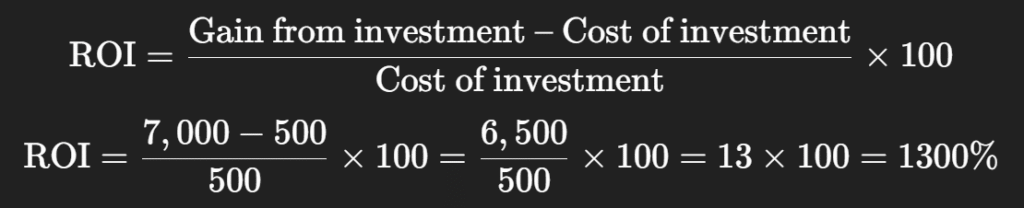
So, in this simple example, you recover the cost of FMVA in less than 1 month of salary increase, and the one-year ROI is very high.
Of course, real life is more complex, but this shows why a low-cost, high-skill program like FMVA can be great for career growth.
2. CFA – Chartered Financial Analyst
The CFA is one of the most respected global certifications for finance, especially in investment research, portfolio management, and asset management.
Who Should Do It?
- People who want to work as:
- Equity or credit research analysts
- Portfolio managers
- Fund managers
- Investment bankers
- Equity or credit research analysts
- Those who want deep, theoretical + practical knowledge of investments.
Key Highlights
- Levels: 3 levels (Level I, II, III)
- Focus: Ethics, quantitative methods, economics, financial reporting, equity, fixed income, derivatives, portfolio management
- Time to complete: Usually 3–5 years
- Approx Total Cost: Around $2,500–$3,500 depending on registration timing and materials
ROI Example for CFA
Let’s take a simple case:
- Total CFA cost (all levels, including exam fees and materials): $3,000
- Current salary: $45,000/year
- After CFA and some experience, suppose you get a portfolio analyst role with $65,000/year
Salary increase = $65,000 – $45,000 = $20,000 per year
Now, simple ROI for the first year after CFA:

Even though CFA takes more time and effort, the long-term salary growth can be huge, especially in the investment industry.
However, CFA exams are tough, and pass rates are around 30–50% per level, so you must be ready to study seriously.
3. CPA – Certified Public Accountant
The CPA is the “gold standard” for accounting and auditing roles, especially in countries like the US.
Who Should Do It?
- People who want to become:
- Auditors
- Financial accountants
- Tax and compliance experts
- Controllers or CFOs in the future
- Auditors
Key Highlights
- Focus: Accounting, auditing, taxation, financial reporting, regulations
- Career Paths: Public accounting firms, corporate accounting, advisory, consulting
- ROI Angle: CPA holders often earn significantly more than non-CPA accountants over time.
Simple Example
- Non-CPA accountant salary: $50,000/year
- CPA accountant salary: $65,000/year
- Cost of CPA exams + review material: say $4,000
Salary increase = $15,000 per year
Even if you take 2 years to pass the CPA exam, the higher income afterward can quickly cover the cost and give strong long-term benefits.
4. CFP – Certified Financial Planner
The CFP (Certified Financial Planner) focuses on personal finance, wealth management, retirement planning, tax planning, and estate planning. It is great for professionals who want to advise individuals and families on money matters.
Who Should Do It?
- Financial advisors
- Wealth managers
- Relationship managers in banks or financial institutions
- People who want to start their own financial planning practice
Key Highlights
- Focus: Investment planning, retirement planning, insurance, tax, estate planning
- Career Paths: Personal financial planner, wealth manager, private banker, financial consultant
Example Scenario
Suppose you are a bank relationship manager earning $40,000/year. After doing CFP, you become a wealth manager and start earning $55,000/year, plus performance bonuses.
Even if the CFP cost is, say, $2,000–$3,000, the salary jump and new bonus opportunities make the ROI attractive, especially as your client base grows.
5. FRM – Financial Risk Manager
The FRM certification is focused on risk management, especially in banks, investment firms, and large companies. It is offered by GARP (Global Association of Risk Professionals).
Who Should Do It?
- People who want to work in:
- Market risk
- Credit risk
- Operational risk
- Enterprise risk management
- Market risk
- Professionals in banks, regulators, consulting firms, treasury, and risk departments
Key Highlights
- Levels: 2 parts (FRM Part I and II)
- Focus: Risk models, derivatives, market risk, credit risk, operational risk, Basel regulations
- Career Roles: Risk analyst, risk manager, risk modeler, regulatory risk professional
Simple ROI Thinking
Risk roles are very important in banks and financial institutions. Because of regulations, companies must have strong risk teams. So FRM can give stable and well-paying careers, especially when paired with other degrees.
6. CAIA – Chartered Alternative Investment Analyst
The CAIA focuses on alternative investments such as hedge funds, private equity, real assets, and structured products.
Who Should Do It?
- People interested in:
- Hedge funds
- Private equity
- Real estate funds
- Alternative investment research
- Hedge funds
It is a great add-on if you already have experience or a certification like CFA and want to specialize in alternatives.
Comparing Certifications: Which One Is Best For You?
Here is a simple comparison in words (you can turn this into a table in your blog editor):
- FMVA – Best for practical modeling skills and corporate finance/FP&A roles. Lower cost, faster completion, high practical ROI.
- CFA – Best for investment research, portfolio management, and asset management. High respect, strong long-term ROI, but difficult and time-consuming.
- CPA – Best for accounting, audit, and reporting roles. Essential for many senior finance and accounting positions.
- CFP – Best for personal finance and wealth management careers. Great if you like dealing with individual clients.
- FRM – Best for risk management in banks and financial institutions.
- CAIA – Best for alternative investments specialization.
Example: Choosing a Certification Based on Career Goal
Example 1: You Want to Become a Financial Analyst in a Company
- Best options: FMVA (for modeling & Excel skills)
- You can later add CFA if you want to move into investment roles.
Example 2: You Love Accounting and Want to Become a CFO
- Start with CPA
- Work in audit or corporate accounting
- Later add certifications or an MBA for leadership skills.
Example 3: You Enjoy Speaking With People About Money
- Best option: CFP
- You can work in wealth management, banks, or start your own practice.
Example 4: You Are Interested in Stock Markets and Portfolio Management
- Best option: CFA
- You can work as an analyst, fund manager, or in investment banking.
Example 5: You Like Managing Risk and Thinking About “What Can Go Wrong?”
- Best option: FRM
- You can work in risk teams in banks, regulators, or large companies.
How to Calculate Your Personal ROI Before Choosing a Certification
Before you spend money and time on any certification, you should think like a finance professional and do a small ROI calculation.
Step 1: Calculate Total Cost
Include:
- Exam fees
- Study material cost
- Training/coaching (if any)
- Your time (you can think of it as effort, not in dollars)
Example:
You plan to do an online finance certification costing $600 plus $100 for books.
Total cost = $600 + $100 = $700
Step 2: Estimate Expected Salary Increase
Check job portals, salary surveys, or talk to seniors to guess how much salary increase is possible.
Example:
Your current salary: $30,000/year
Expected salary after certification: $38,000/year
Salary increase = $8,000 per year
Step 3: Simple Payback Period

So, in this simple example, you recover the money spent in about 1 month of extra salary.
Step 4: Simple ROI for First Year

This shows why a well-chosen finance certification can be one of the best investments in your career.
Tips to Choose the Best Certification for Your Career Growth
- Start With Your Goal, Not the Brand Name
Don’t just choose CFA or CPA because everyone talks about them. Pick based on the job you actually want. - Check Job Descriptions
Go to job portals (like LinkedIn, Indeed, Naukri, etc.) and see which certifications employers list for your dream role. - Think About Your Strengths
- If you love numbers and theory → CFA/FRM could suit you.
- If you like rules, accuracy, and reports → CPA is ideal.
- If you enjoy talking to people and giving advice → CFP is better.
- If you want hands-on Excel skills and corporate roles → FMVA works well.
- If you love numbers and theory → CFA/FRM could suit you.
- Consider Time and Difficulty
Some courses (like FMVA) are faster and more practical. Others (like CFA/CPA) take years and need heavy preparation. - Plan for the Long Term
Don’t only think about your first job. Think where you want to be in 5–10 years and choose certifications that help you reach that goal.
Conclusion: Finance Certifications as a Smart Career Investment
Finance certifications like FMVA, CFA, CPA, FRM, CFP, and CAIA can completely change your career path. They do require money, time, and effort, but if you choose the right certification for your goal, the return on investment can be very high.
- If you want practical corporate finance skills, start with FMVA.
- If you dream of investment and portfolio management, aim for CFA.
- If you love accounting and audit, go for CPA.
- If you want to guide people on personal finance, choose CFP.
- If you are curious about risk and regulations, FRM is a great fit.
- If you want to work in alternative investments, consider CAIA.
Always calculate your personal ROI by comparing the cost of the certification with the expected salary increase and opportunities. When you do this thoughtfully, a finance certification is not just a course—it becomes a powerful tool for career growth and long-term success.