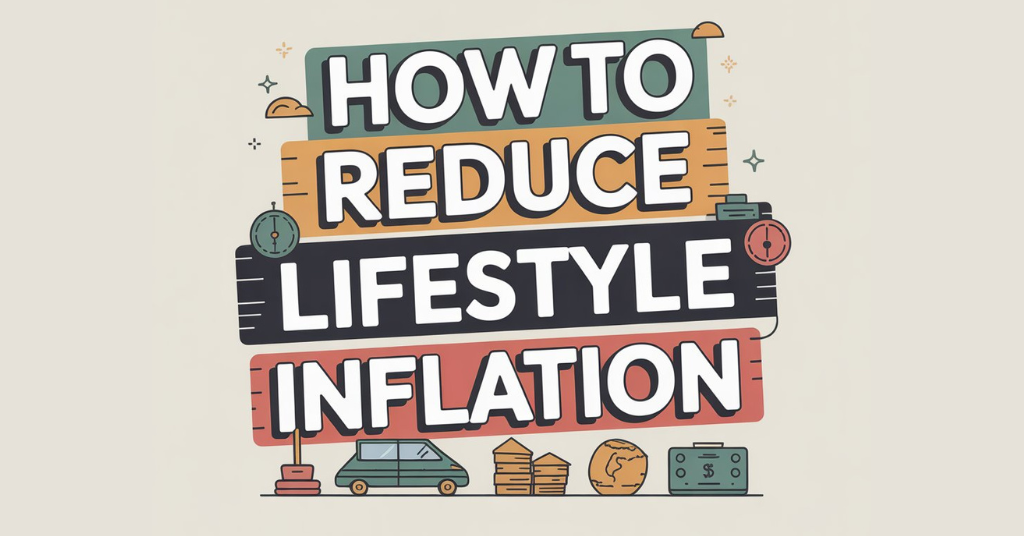
Lifestyle inflation means that when your income increases, your expenses also increase. For example, when you get a salary hike, instead of saving the extra money, you may start eating out more, buying new gadgets, upgrading your car, or spending on clothes and entertainment.
This habit slowly “inflates” your lifestyle. The main problem is that even after earning more, you do not feel financially secure because your spending grows equally.
In this blog, we will discuss:
- What lifestyle inflation is
- Why it happens
- How it affects your financial life
- How to reduce lifestyle inflation
- Practical examples
- Real calculations
- Long-term strategies to remain financially healthy
The language is very simple so that every reader can understand each point clearly.
What Is Lifestyle Inflation?
Lifestyle inflation (also called lifestyle creep) is when your spending increases as your income increases. It happens slowly, so you may not notice it in the beginning.
Simple Example
Suppose you earn $2,000 per month. After paying all expenses, you save $300.
Next year, you get a raise, and your salary becomes $2,500. Ideally, you should now be able to save more than $300.
But what usually happens?
- You start eating out more
- You buy new clothes
- You upgrade your phone
- You take more weekend trips
After doing all this, you still save only $300 or sometimes even less.
This is lifestyle inflation — your income increased, but your savings didn’t.
Why Does Lifestyle Inflation Happen?
Lifestyle inflation happens for different reasons:
1. Social Pressure
When you see others buying new gadgets, cars, clothes, or traveling often, you feel the need to do the same.
2. Reward Mindset
You feel like rewarding yourself after earning more:
“Since I work hard, I deserve a new phone.”
This often leads to unnecessary expenses.
3. Lack of Planning
When people don’t have a budget or savings plan, the extra money naturally goes toward spending.
4. Emotional Spending
Some people spend more to feel better or reduce stress.
5. Overconfidence
You may think:
“I earn more now, so I can buy whatever I want.”
This thinking is dangerous for long-term financial stability.
Why Is Lifestyle Inflation Harmful?
Lifestyle inflation may feel good in the short run, but it is harmful in the long run:
1. You Miss Wealth-Building Opportunities
Savings and investments are the foundation of wealth. If income increases but savings don’t, then wealth never grows.
2. You Stay in the Same Financial Position
You earn more but still feel financially stuck.
3. You Become Dependent on Your Salary
If your lifestyle becomes expensive, you can no longer survive without your salary.
If you lose your job, the situation becomes stressful.
4. Emergencies Become Harder to Handle
Without savings or emergency funds, even a small unexpected expense can create big problems.
5. Retirement Planning Gets Delayed
More spending today means less saving for the future.
How To Reduce Lifestyle Inflation — 15 Effective Strategies
Below are simple and practical tips you can use right away.
1. Create or Update Your Budget After Every Raise
When your salary increases, your budget must also change.
Example Calculation
Old income: $2,000
New income: $2,500
Increase: $500
A smart budget rule is to save 70% of every raise.
So:
70% of $500 = $350 (save/invest)
30% of $500 = $150 (use for lifestyle upgrades)
This way, you enjoy the raise and build wealth at the same time.
2. Always Save First — Follow the “Pay Yourself First” Rule
Before spending on anything, transfer money to:
- Savings account
- Emergency fund
- Investment account
- Retirement plan
When saving is automatic, lifestyle inflation reduces naturally.
3. Set Clear Financial Goals
When you know your goals, you can control your spending easily.
Your goals can be:
- Buying a house
- Starting a business
- Paying student loans
- Creating a retirement fund
- Saving for children’s education
- Building a $10,000 emergency fund
Goals guide your spending.
4. Distinguish Between Needs and Wants
Before buying something, ask yourself:
- Is this a need or a want?
- Do I really need it right now?
- Will it help me in the long run?
If it is a want, pause before buying.
5. Use the 48-Hour Rule for Big Purchases
If you want to buy something expensive, wait for 48 hours before deciding.
In most cases, the excitement reduces, and you skip the purchase.
6. Use a Percentage Rule for Every Income Increase
A useful rule is:
- 50% to Savings & Investments
- 30% to Future Needs (insurance, education, emergency fund)
- 20% to Lifestyle Improvements
This keeps spending in control.
7. Avoid Taking Unnecessary Loans After a Raise
People often:
- Upgrade cars
- Buy high-end gadgets
- Purchase furniture on EMI
- Take travel loans
This creates long-term financial stress.
If you don’t need a loan, don’t take one.
8. Build a Strong Emergency Fund
An emergency fund protects you from:
- Health expenses
- Job loss
- Home repairs
- Car repairs
Calculation Example
Monthly expenses = $1,800
Emergency fund requirement = 6 months
So you need:
$1,800 × 6 = $10,800
This fund helps avoid debt and unnecessary stress.
9. Track Your Spending Monthly
If you don’t track your expenses, lifestyle inflation will happen silently.
Use:
- Notebooks
- Mobile apps
- Budget spreadsheets
This makes you aware of wasteful spending.
10. Avoid Impulse Shopping
Impulse buying usually happens due to:
- Sales
- Ads
- Social media influence
- Mood changes
To control impulse buying:
- Shop with a list
- Avoid window shopping
- Keep only one credit card
- Unsubscribe from tempting shopping emails
11. Practice Minimalism in Purchases
Minimalism does not mean being cheap. It means:
- Buying fewer, higher-quality items
- Reducing clutter
- Spending only on things that add value
This keeps your lifestyle simple and affordable.
12. Don’t Upgrade Your Home or Car Too Quickly
After a raise, many people upgrade their:
- Apartment
- Bike/car
- Furniture
- Gadgets
Ask yourself:
Do I really need an upgrade, or is it just desire?
Often, the old one still works perfectly.
13. Spend More on Experiences and Less on Things
Research shows experiences bring more happiness than objects.
For example:
- Travel
- Learning a skill
- Family activities
- Hobbies
These give long-term joy without massive lifestyle inflation.
14. Use the “Raise to Invest” Mindset
Convert every salary increase into an investment opportunity.
Example Calculation
Extra income per month: $300
If invested at 8% annual return for 10 years:
Future value ≈ $54,000
This is the power of controlling lifestyle inflation.
15. Review Your Financial Life Every 6 Months
Check:
- Spending
- Savings
- Investments
- Debt
- Goals
Regular review keeps lifestyle inflation under control.
Real-Life Example: How Reducing Lifestyle Inflation Builds Wealth
Example Scenario
Person A and Person B both get a raise of $500 per month.
Person A
Spends entire $500 on lifestyle:
- New clothes
- Weekend outings
- Costly food
- EMI increase
- New smartphone
Savings increase = $0
Person B
Follows the smart rule:
- Saves 70% of raise = $350
- Uses 30% of raise = $150 for lifestyle
After 5 years
Person A’s savings from raise = $0
Person B’s savings from raise:
$350 × 12 × 5 = $21,000
(Without even counting interest!)
This simple example shows why reducing lifestyle inflation is essential.
Benefits of Reducing Lifestyle Inflation
- More savings
- Better financial security
- Freedom from paycheck stress
- Ability to handle emergencies
- Faster achievement of goals
- Better retirement planning
- Higher investment returns
- Peace of mind
Also Read: What Is Considered a First Time Home Buyer?
Conclusion
Lifestyle inflation feels good in the short term but can damage your long-term financial health. By using simple strategies like budgeting, saving first, controlling impulse purchases, and setting clear goals, you can easily reduce lifestyle inflation.
The key is being intentional with your money.
Instead of letting your lifestyle grow automatically, let your wealth grow automatically.