Let me be very honest with you.
Most people download financial apps thinking:
👉 “This will help me save money.”
👉 “This will make investing easy.”
👉 “This app is popular, so it must be safe.”
That blind trust is exactly where the problem begins.
As a financial advisor, I see the same mistake again and again:
People trust apps without questioning how these apps really make money.
Some apps don’t charge you upfront.
Instead, they charge you silently — through fees, data selling, bad financial nudges, or risky practices.
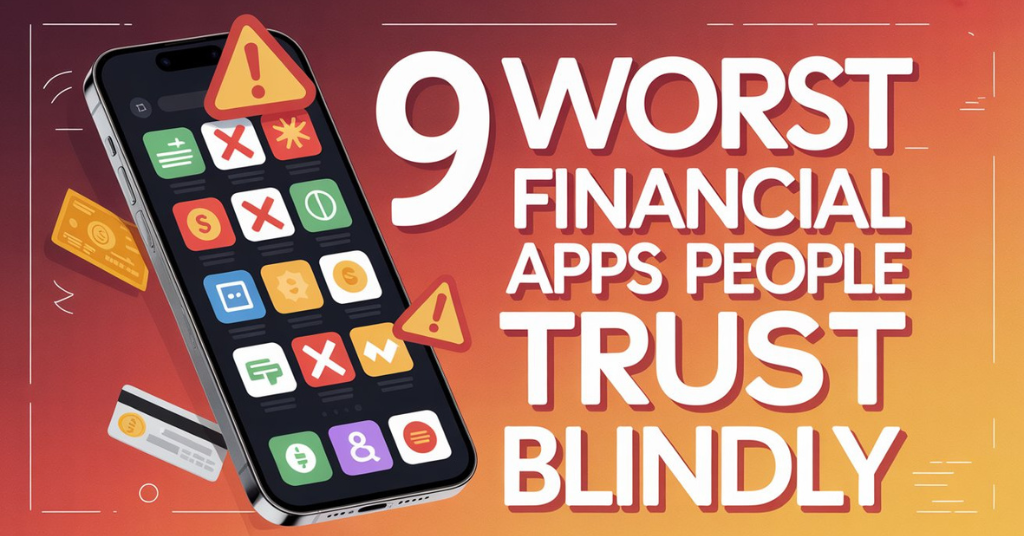
In this interactive blog, I’ll walk you through 9 worst financial apps people trust blindly, explain why they’re dangerous, and show you real dollar ($) examples so you understand the impact clearly.
👉 Let’s start.
9 Worst Financial Apps People Trust Blindly
👉 #1: Crypto Trading Apps That Track Everything You Do
Crypto apps look exciting. Charts move fast. Profits feel possible.
But behind the scenes, many of these apps collect far more data than needed.
What they usually track
- Your trading behavior
- How often you buy or sell
- Device data and location
- How long you stare at price charts
- Your emotional triggers (panic selling, FOMO buying)
Why this is dangerous
These apps often nudge you to trade more, not smarter.
More trades = more fees = more profit for the app.
Dollar example
Let’s say:
- Fee per trade = $1
- Extra nudged trades per month = 25
Monthly cost:
$1 × 25 = $25
Yearly cost:
$25 × 12 = $300 lost, without you realizing why.
And remember — losses from bad timing are on top of these fees.
👉 #2: Budgeting Apps That Sell Your Spending Behavior
Budgeting apps promise to help you control money.
Ironically, some profit by exposing your financial habits.
What they can infer from your data
- How much debt you carry
- Whether you live paycheck to paycheck
- Your spending weaknesses (food, shopping, travel)
- Your likelihood to accept loans or credit cards
What happens next?
You start seeing:
- “Pre-approved” loan offers
- Credit cards with “limited-time” deals
- Buy-now-pay-later temptations
These offers are not random.
Dollar example
You accept a credit card offer:
- Balance = $1,500
- Interest rate = 18% APR
Interest paid in one year:
$1,500 × 18% = $270
That $270 came from data-driven targeting, not necessity.
👉 #3: Credit-Builder Apps With Hidden Costs
Credit-builder apps sound harmless.
“Just use us and your credit score improves!”
But many people don’t notice hidden fees and data usage.
Common issues
- Monthly subscription fees
- Mandatory account linking
- Upselling premium features
- Data sharing with lenders
Advisor truth
Improving credit should be slow and steady — not rushed.
Dollar example
- Monthly fee = $15
- Yearly cost = $15 × 12 = $180
If your score improves only slightly, you might’ve paid $180 for minimal benefit, while exposing your data.
👉 #4: Loan Apps That Trap You in a Debt Loop
This is one of the most dangerous categories.
Some loan apps:
- Approve loans instantly
- Hide real interest costs
- Charge “processing” or “service” fees
- Penalize delays aggressively
Why people trust them
- Fast money
- No paperwork
- Emergency needs
The real cost
Loan amount = $300
Processing fee = 20% → $60
Amount received = $240
But you still repay $300 or more.
That’s not convenience — that’s a trap.
👉 #5: Investment Apps That Gamify Your Money
Some investment apps feel like games:
- Confetti when you trade
- Instant rewards
- Colorful profit screens
Why this is risky
Money decisions shouldn’t feel like slot machines.
Gamification leads to:
- Overtrading
- Emotional decisions
- Poor long-term results
Dollar example
Extra trades due to excitement:
- 40 extra trades/year
- Fee per trade = $1.25
Cost:
40 × $1.25 = $50/year
That’s just fees — not bad decisions.
👉 #6: “Free” Apps Where YOU Are the Product
Here’s a golden rule I always teach:
If an app is free, you’re not the customer — you’re the product.
These apps earn money by:
- Selling user behavior data
- Sharing financial insights with marketers
- Creating consumer profiles
What your data is worth
A single user’s financial profile can be sold for $100–$300 per year.
You earn: $0
They earn: Recurring revenue
👉 #7: Apps Asking for Too Many Permissions
Ask yourself this:
Why does a finance app need:
- Contact access?
- Location tracking?
- Phone storage?
- Device analytics?
Advisor warning
Excess permissions increase:
- Identity theft risk
- Data leaks
- Account takeover chances
Dollar risk
Identity theft recovery can cost:
- Fraud losses: $500–$2,000
- Time loss
- Credit score damage
One careless permission can cost you years of cleanup.
👉 #8: Apps With Complicated or Vague Privacy Policies
If the privacy policy:
- Is extremely long
- Uses vague terms like “partners” or “affiliates”
- Avoids clear explanations
That’s intentional.
Why?
Confusion protects the company, not you.
Advisor tip
If you can’t understand:
- What data is collected
- Who it’s shared with
- How long it’s stored
👉 Don’t trust it.
👉 #9: All-in-One Finance Apps That Know TOO Much
Apps that combine:
- Banking
- Investing
- Loans
- Spending
- Credit
Sound convenient — but centralize risk.
One breach = everything exposed
- Income
- Expenses
- Investments
- Debt
- Identity data
Dollar impact
A single breach could lead to:
- Fraud losses: $1,000+
- Credit repair costs
- Stress and legal hassle
Convenience should never replace caution.
Also Read: How To Create A Wealth Mindset: Think Rich And Grow Rich
How to Protect Yourself (Advisor Checklist)
Before trusting any financial app:
✔ Use apps with clear revenue models
✔ Avoid apps that push urgency
✔ Minimize permissions
✔ Prefer paid apps with transparent pricing
✔ Never link primary bank accounts blindly
✔ Check monthly statements carefully
Final Advisor Thoughts
Financial apps are tools — not guardians.
Blind trust turns tools into traps.
Awareness turns tools into advantages.If you slow down, read carefully, and calculate real costs in dollars,
you’ll avoid silent money leaks most people never notice.