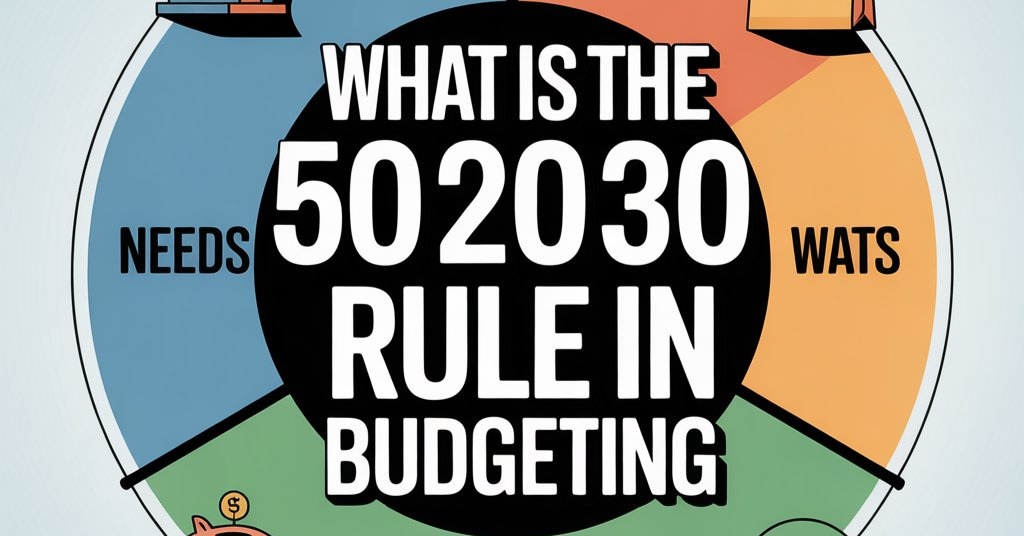
The 50 20 30 rule in budgeting is a very simple money rule that helps you decide how to use your monthly income.
According to this rule, you divide your after-tax income into three parts:
- 50% for Needs
- 20% for Savings and Debt Repayment
- 30% for Wants
This rule is also known as the 50-30-20 rule, but the idea is the same. So, what is the 50 20 30 rule in budgeting? It became popular after being explained in the book “All Your Worth: The Ultimate Lifetime Money Plan” by Elizabeth Warren and Amelia Warren Tyagi.
The main goal is balance:
- You pay your important bills,
- You save for the future,
- And you still enjoy your life today.
In this blog, we will understand this rule in simple language with many dollar examples and calculations so your readers can easily use it in real life.
Use Your After-Tax Income, Not Gross Income
The 50 20 30 rule works with after-tax income (net income), not with your full (gross) salary.
- Gross Income = Income before taxes and deductions
- Net / After-Tax Income = Money that actually comes into your bank account
Example: Understanding Net Income
Suppose your monthly salary details look like this:
- Gross salary: $4,000
- Taxes and other deductions: $600
- Take-home pay (after tax): $3,400
For the 50 20 30 rule, you will use $3,400, not $4,000.
All your 50%, 20%, and 30% calculations will be based on $3,400.
The Three Buckets – 50%, 20%, 30%
1. 50% – Needs (Essential Expenses)
Needs are your must-pay expenses. If you stop paying them, your life becomes difficult or unsafe.
Common “Needs” include:
- Rent or home mortgage payment
- Basic utilities: electricity, water, heating, internet (basic plan)
- Basic groceries and household essentials
- Transportation to work (gas, bus pass, train ticket, etc.)
- Health insurance premiums (if not paid by employer)
- Minimum payments on loans and credit cards
- Childcare or essential school expenses
👉 Simple test:
If you cannot skip this expense without serious trouble, it is a Need.
2. 20% – Savings and Debt Repayment
This 20% portion is for your future and financial safety. It helps you:
- Build an emergency fund
- Save for retirement
- Pay off debt faster
- Save for goals like a car, home, education, or business
This category includes:
- Money into your emergency savings account
- Contributions to retirement accounts (401(k), IRA, etc., if not already deducted)
- Extra payments on loans and credit cards (above minimum)
- Investments in mutual funds, index funds, or other long-term options
Think of this 20% as “paying your future self.”
3. 30% – Wants (Lifestyle & Fun)
Wants are things that make life enjoyable, but are not essential for survival.
Common “Wants” include:
- Eating out at restaurants or ordering food
- Coffee from cafés
- Streaming subscriptions (Netflix, Disney+, Spotify, etc.)
- Shopping for clothes, gadgets, and accessories
- Vacations, weekend trips, movies, concerts
- Hobbies and entertainment
These things are not bad. In fact, they are important for happiness. The 50 20 30 rule simply says:
Enjoy your life, but keep these “Wants” within 30% of your income, so they don’t destroy your savings.
Simple Dollar Calculations With the 50 20 30 Rule
Now let’s use real dollar examples so your readers can understand clearly.
Example 1: Monthly Income = $3,000 (After Tax)
Suppose your net monthly income is $3,000.
Apply the 50 20 30 rule:
- 50% for Needs
= 50% of $3,000
= 0.50 × 3,000
= $1,500 - 20% for Savings & Debt
= 20% of $3,000
= 0.20 × 3,000
= $600 - 30% for Wants
= 30% of $3,000
= 0.30 × 3,000
= $900
So your monthly budget can look like this:
| Category | Percentage | Amount (USD) | Example Use |
| Needs | 50% | $1,500 | Rent, groceries, utilities, transport, minimum loan payments |
| Savings & Debt | 20% | $600 | Emergency fund, retirement savings, extra credit card payment |
| Wants | 30% | $900 | Eating out, streaming services, shopping, entertainment, small trips |
This way, you cover all important expenses, build savings, and still spend on fun.
Example 2: Monthly Income = $4,500 (After Tax)
Now imagine your net income is $4,500 per month.
- Needs – 50%
= 0.50 × 4,500
= $2,250 - Savings & Debt – 20%
= 0.20 × 4,500
= $900 - Wants – 30%
= 0.30 × 4,500
= $1,350
Now let’s break it down as a sample plan:
Needs ($2,250)
- Rent: $1,200
- Groceries: $350
- Utilities (electricity, water, internet, phone): $250
- Transport (gas or pass): $200
- Health insurance: $150
- Minimum loan payments: $100
Savings & Debt ($900)
- Emergency fund: $300
- Retirement investment: $400
- Extra loan payment: $200
Wants ($1,350)
- Eating out & coffee: $300
- Streaming services: $50
- Shopping (clothes, gadgets, etc.): $350
- Weekend trips / fun: $650
This is just an example. Every person can adjust the items inside each bucket, but the percentages give a clear direction.
Example 3: Monthly Income = $2,000 (After Tax)
If your net income is $2,000, the calculation is:
- 50% Needs = 0.50 × 2,000 = $1,000
- 20% Savings & Debt = 0.20 × 2,000 = $400
- 30% Wants = 0.30 × 2,000 = $600
Even with a smaller income, this rule helps you prioritize needs and savings before spending on wants.
How To Start Using The 50 20 30 Rule (Step-by-Step)
You can explain these steps clearly in your blog so readers can apply the rule smoothly.
Step 1: Find Your Real Monthly Income
- Look at your pay slip or bank statement.
- Note the actual amount you receive after tax and deductions.
- If your income changes each month (freelancer, gig worker), take an average of the last 3–6 months.
Step 2: Track Your Current Spending
For one month, track every expense:
- Check your bank and card statements
- See your cash / wallet / UPI spending
- Write them in a notebook or use a budget app
Then label each expense as:
- N – Need
- S – Savings/Debt
- W – Want
This will show you where your money is actually going.
Step 3: Compare With the 50 20 30 Target
Now calculate:
- How much are you currently spending on Needs?
- How much on Savings & Debt?
- How much on Wants?
Compare your real percentages with 50%, 20%, and 30%.
Most people find that:
- Needs might be more than 50%, or
- Wants might be higher than 30%, and
- Savings might be less than 20%
This is normal. The rule is not an exam; it is a guide.
Step 4: Adjust Slowly
You don’t have to reach the perfect 50 20 30 in one month.
Small steps:
- Cancel 1–2 unnecessary subscriptions or reduce eating out.
- Move that extra money into savings or debt repayment.
- Try to reduce overspending on Wants by 5–10% each month.
- Over a few months, come closer to the ideal percentages.
What If My Needs Are More Than 50%?
In many cities, rent and transport are expensive, so needs can easily become more than 50%.
Here’s what your readers can do:
- Check if any Wants are hiding as Needs
- Very expensive apartment in a prime area
- High mobile/internet plan
- Constant takeout meals instead of cooking
- Very expensive apartment in a prime area
- Some of these can be adjusted without harming your life.
- Try to reduce fixed costs
- Consider a cheaper but safe neighborhood
- Use public transport or carpool
- Share housing with roommates
- Consider a cheaper but safe neighborhood
- Temporarily lower Wants
- For some months, reduce Wants from 30% to maybe 15–20%
- Use that money to cover Needs and build emergency savings
- For some months, reduce Wants from 30% to maybe 15–20%
- Set a long-term goal
- Maybe you cannot fix everything now, but you can plan to increase your income or reduce high-cost items over time.
Remember:
The 50 20 30 rule is flexible. It gives direction, not pressure.
What If I Have a Lot of Debt?
If someone has:
- Big credit card balances
- Personal loans
- Student loans
Then the 20% savings & debt category becomes extremely important.
Tips you can share:
- Use a part of the 30% Wants bucket to pay extra toward high-interest debts.
- For a while, their personal rule might look like 50 30 20, where 30% goes to Savings & Debt (including extra payments).
- Once expensive debt is under control, shift back to the normal pattern and increase investment savings.
This strategy helps people get out of debt faster and save a lot of money on interest.
50 20 30 Rule vs Other Budget Methods
Your readers may have heard about other budgeting styles. You can briefly compare them:
- Zero-Based Budgeting
- Every single dollar is given a job (rent, savings, groceries, etc.)
- Income – Expenses = 0
- Very detailed but can feel complicated.
- Every single dollar is given a job (rent, savings, groceries, etc.)
- Pay Yourself First (like 80/20 rule)
- You save a fixed percentage (for example, 20%) first.
- Then you are free to spend the remaining 80%.
- Simple, but does not clearly separate Needs and Wants.
- You save a fixed percentage (for example, 20%) first.
- 50 20 30 Rule
- Uses only three big categories
- Easy to understand and follow
- Balances needs, savings, and fun
- Uses only three big categories
For beginners, the 50 20 30 rule is an excellent starting point because it gives structure without being too strict.
Practical Tips To Make The 50 20 30 Rule Work
Here are some simple, actionable tips you can include to make your blog more helpful and SEO friendly:
1. Automate Your Savings (20% Bucket)
- As soon as your salary arrives, set up an automatic transfer of 20% into a savings or investment account.
- This way, you are “paying your future self” first, before spending on Wants.
2. Use Separate Bank Accounts
- One account for Needs
- One account for Savings/Investments
- One account (or even a prepaid card) for Wants
When the money in the Wants account finishes, you stop spending on non-essentials that month.
3. Review Your Budget Every 3 Months
- Did your income increase or decrease?
- Did rent, insurance, or other costs change?
- Adjust your 50%, 20%, and 30% amounts accordingly.
4. Be Flexible During Emergencies
- Lost your job? Medical issue in the family?
- It is okay if Needs temporarily become 60–70%.
- Use your emergency fund if needed.
- Once things become normal, slowly move back toward the 50 20 30 balance.
5. Combine It With Clear Goals
The rule works even better if you have specific goals like:
- “Save $1,000 for emergency fund in 6 months”
- “Pay off $2,000 credit card debt in 1 year”
- “Invest $200 per month for retirement”
Your 20% savings bucket will then have a clear purpose, which keeps you motivated.
Example: Creating Your Own 50 20 30 Budget
Let’s take one more complete example that your readers can copy as a template.
Assume:
- After-tax income = $3,600 per month
Step 1: Calculate the three parts
- Needs (50%) = 0.50 × 3,600 = $1,800
- Savings & Debt (20%) = 0.20 × 3,600 = $720
- Wants (30%) = 0.30 × 3,600 = $1,080
Step 2: Fill in your own numbers
Needs – Up to $1,800
- Rent: $1,100
- Groceries: $350
- Utilities: $200
- Transport: $100
- Insurance & other essential bills: $50
Savings & Debt – At least $720
- Emergency fund: $250
- Retirement investment: $300
- Extra student loan or credit card payment: $170
Wants – Up to $1,080
- Eating out: $250
- Coffee & snacks: $100
- Streaming & apps: $50
- Shopping: $280
- Entertainment / outings / short trips: $400
Anyone reading your blog can replace these amounts with their own numbers and build a personal 50 20 30 budget easily.
Also Read: Why Finance Is Important
Conclusion: Is The 50 20 30 Rule Right For You?
The 50 20 30 rule in budgeting is a powerful yet simple way to manage your money:
- 50% for Needs – to keep your life stable and secure
- 20% for Savings and Debt – to protect your future and grow your wealth
- 30% for Wants – to enjoy your present without guilt
It works best because:
- It is easy to understand
- It gives a clear structure to your spending
- It balances today’s happiness with tomorrow’s security
Your readers do not need perfect math skills or complex apps. They only need:
- Their after-tax monthly income
- A calculator (or phone)
- The courage to look at their real spending and make small changes
If they start applying this rule, even slowly, they will see better control over money, less stress, and more confidence in their financial life.