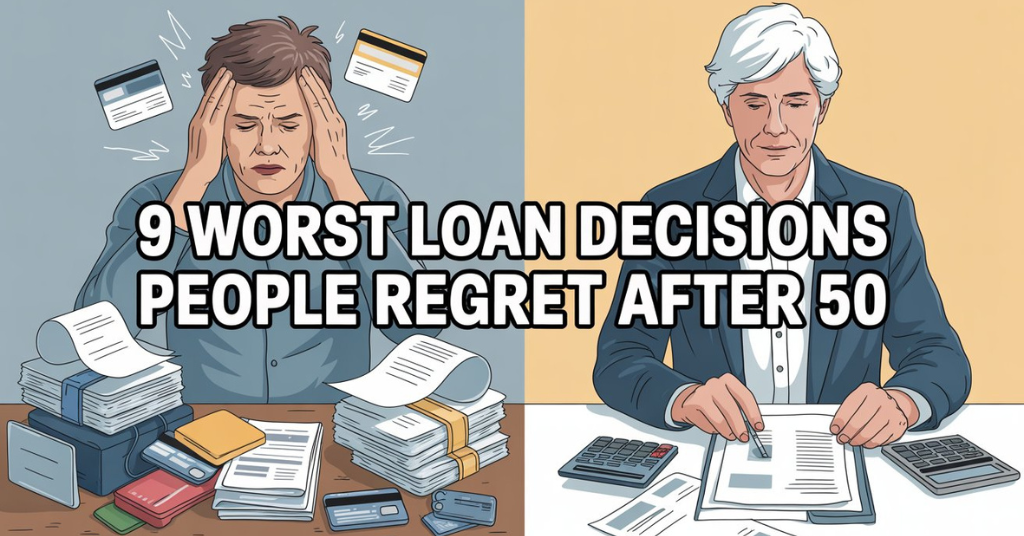
Turning 50 is a powerful milestone. You’ve likely built a life, perhaps raised a family, and maybe even worked decades toward financial stability. At this stage, your financial choices matter more than ever — especially when it comes to borrowing money.
A loan that seems helpful today can turn into regret tomorrow — especially when retirement, health needs, or unexpected family events arrive. In this interactive guide, I’ll walk you through the 9 worst loan decisions people regret after 50, why they hurt, and how you can make smarter choices.
Ready?
1. Taking a High-Interest Payday Loan
Imagine needing $800 for an urgent car repair. A payday loan says “quick cash, no credit check” — but the cost is huge.
📌 Why it’s a regret:
Payday loans often come with interest rates above 300% APR.
💡 Example:
You borrow $800 to fix your car.
• Fee: $200 for 2 weeks
• Effective APR: 400%+
If you roll it over or extend it, you could end up paying $1,200 or more — for only $800 borrowed.
💸 Advisory Tip:
Explore alternatives — a personal loan from your bank, credit union, or negotiating a payment plan with the repair shop — before a payday loan.
2. Using a Home Equity Loan for Everyday Spending
Your home may be your biggest asset. But borrowing against it for non-essential expenses can be dangerous.
📌 Why it’s a regret:
Home equity loans use your house as collateral. If you can’t pay, you risk foreclosure.
💡 Example:
You take a $30,000 home equity loan to go on an extended vacation.
• Interest Rate (average): 6%
• Monthly Payment (10-year term): ≈ $333
• Total Paid Over 10 Years: $40,000+
Is that vacation worth a decade of payments — or risking your home value?
💸 Advisory Tip:
Use home equity loans only for investments that increase value (like home repairs), not lifestyle spending.
3. Rolling Retirement Savings Into Loan Repayment
People sometimes borrow from their 401(k) or IRA to pay off debt or emergency expenses. It feels safe — until it isn’t.
📌 Why it’s a regret:
You pay yourself back with after-tax dollars — and miss out on investment growth.
💡 Example:
You withdraw $50,000 from your retirement plan.
• Missed growth (conservative 5%):
After 10 years you could have grown to $81,445
• Plus you’ll pay taxes + penalties if under 59½
💸 Advisory Tip:
Look for emergency funds, payment plans, or low-interest options before using retirement funds.
4. Co-Signing a Loan for a Family Member
You trust your child or sibling. They need to borrow money. You co-sign.
📌 Why it’s a regret:
If they fail to pay, you’re on the hook. Not only financially — but your credit score can take a hit.
💡 Example:
They borrow $25,000 for a car. Payments stop after 6 months.
• Missed payments hurt your credit
• Loan collectors contact you
• You may have to pay
💸 Advisory Tip:
Before co-signing, ask:
• Can they prove income?
• Do they have a repayment plan?
• Can they get the loan in their own name?
If not, politely decline.
5. Refinancing With a Longer Term to Lower Payments
Refinancing a mortgage to reduce monthly payments sounds smart — but extending the term can cost you more.
📌 Why it’s a regret:
Lower monthly payments might mean paying more interest over time.
💡 Example:
You have 15 years left on a home loan at 5%.
You refinance to 30 years at 4.5%.
• Monthly drops from $1,500 → $1,000
• But total interest paid skyrockets
Over 30 years you may pay $100,000+ in interest, versus less if you kept the shorter term.
💸 Advisory Tip:
Refinance only if it aligns with your long-term goals — not just short-term cash flow.
6. Borrowing to Invest in High-Risk Ventures
After 50, stability matters. Yet some people take loans to invest in speculative ventures or trend investments.
📌 Why it’s a regret:
If the venture fails, you still owe the loan — and interest continues.
💡 Example:
You borrow $40,000 at 7% to invest in a risky startup idea.
• Annual interest: $2,800
• If the investment loses value — you’re still paying interest!
💸 Advisory Tip:
Never borrow money to invest in risk-heavy opportunities, especially close to retirement. Use only disposable savings for speculative investment.
7. Borrowing to Pay Off Credit Cards Without a Plan
Taking a loan to pay off high-interest credit cards is common — but if there’s no repayment discipline, the cycle repeats.
📌 Why it’s a regret:
You may pause credit card payments, but then rack up new balances and still owe the loan.
💡 Example:
You take a $20,000 debt consolidation loan at 10% to pay off credit cards.
• Monthly (5-year): ~ $425
• But you continue using cards — now have new debt + loan
💸 Advisory Tip:
If you consolidate, stop new credit card spending and commit to a payment plan.
8. Payday Alternative Loans Without Understanding Terms
Some banks and credit unions offer “payday alternative loans” — better than payday loans, but still risky if misunderstood.
📌 Why it’s a regret:
Even lower-cost alternatives can trap you if you can’t repay quickly.
💡 Example:
You take a $1,000 alternative loan with fees totaling $100 over 6 months.
• APR may look low, but if you can’t pay in time you incur penalties.
• You could end up rolling over and paying more.
💸 Advisory Tip:
Always read full terms before borrowing — and have a repayment timeline well before maturity.
9. Borrowing Without a Written Repayment Plan
This is the underlying theme in almost all loan regrets: borrowing without a clear, written repayment strategy.
📌 Why it’s a regret:
Without structure, loan balances can linger, interest compounds, and stress builds.
💡 Example:
You borrow $10,000 from a friend or informal lender.
• No set due date
• No documented interest
• Payments made when “possible”
Months pass — no progress. Miscommunication, hurt feelings, financial strain.
💸 Advisory Tip:
Even with family loans, write a simple contract, outline payments, and set expectations.
How to Protect Yourself After 50
Making smart loan decisions after age 50 could be the difference between financial independence and stress in retirement.
Here are steps you can take:
✔️ 1. Build an Emergency Fund First
Set aside at least 3–6 months of expenses before borrowing.
✔️ 2. Understand APR, Fees, and Total Cost
Always ask:
💡 “What will I pay over the life of this loan?”
✔️ 3. Avoid Loans That Threaten Your Home
If it’s not essential or income-producing, don’t borrow against your house.
✔️ 4. Create a Written Repayment Plan
Even if informal — clarity protects relationships and finances.
✔️ 5. Use Loans for Value, Not Convenience
Borrow to improve your life long-term — not to maintain lifestyle spending.
Also Read: Common Home Loan Mistakes: A Guide to Avoid Costly Errors
Conclusion
Loans can be powerful tools — but after 50, the cost of mistakes is higher. The nine regrets outlined here show a pattern: borrowing without strategy, awareness, or long-term planning leads to regret.
As your advisor, I want you to borrow only when needed, with full clarity on cost, timeline, and repayment. That’s how you protect your financial freedom and stride into retirement with confidence.