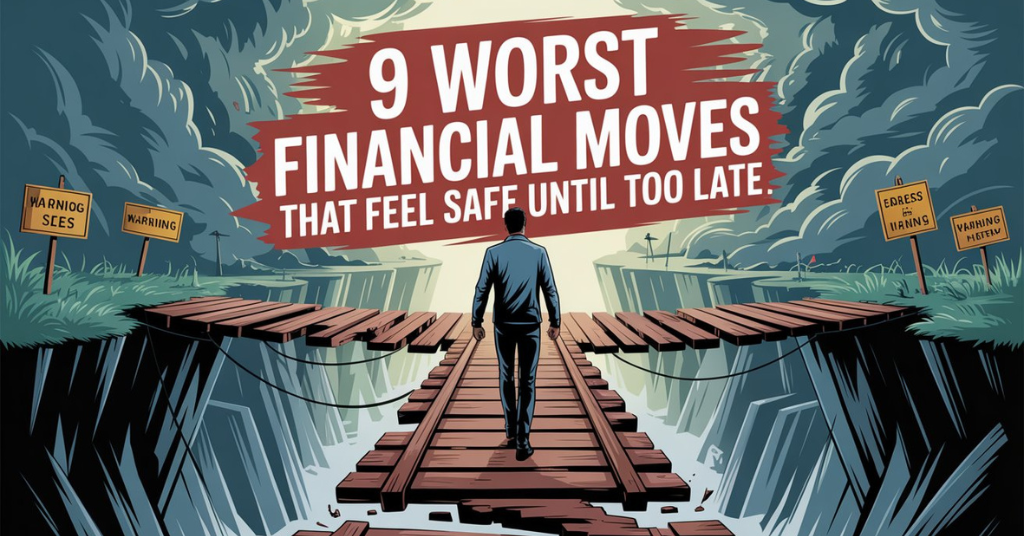
Most people don’t ruin their finances by making reckless decisions.
They do it by making comfortable, familiar, and “safe-feeling” choices.
As your financial advisor in this guide, I’ll walk you through 9 worst financial moves that feel safe until it’s too late—but quietly damage your future. I’ll explain why they feel safe, how they backfire, and what smarter alternatives look like, using clear examples and dollar calculations.
Take this slowly. Each point builds awareness that could save you thousands—or even hundreds of thousands—of dollars over time.
9 Worst Financial Moves That Feel Safe Until It’s Too Late
1. Not Building an Emergency Fund (Feels Calm—Creates Chaos)
This mistake usually starts with a thought like:
“I don’t need emergency savings right now. I’ll manage if something happens.”
It feels safe because nothing is wrong yet.
Why it’s dangerous
Life doesn’t wait until you’re ready. One unexpected expense can push you into debt.
Real example
You have no emergency fund.
Your car breaks down → repair costs $1,800.
You use a credit card at 20% interest.
If you pay only the minimum:
- Total paid over time ≈ $2,300
- Extra cost just for being unprepared ≈ $500
That’s money you didn’t need to lose.
Advisor advice
Start small:
- $25 per week = $1,300 per year
- Enough to stop emergencies from becoming debt disasters
2. Paying Off Low-Interest Debt Too Aggressively
Paying debt early feels mature and disciplined.
But sometimes, it’s financially inefficient.
Why it feels safe
Debt makes people uncomfortable. Paying it off feels like relief.
The hidden cost: lost opportunity
If your debt has low interest, paying it early may cost you more than it saves.
Example with numbers
You have:
- Mortgage at 3% interest
- Investment earning 7% annually
- Extra cash: $50,000
Option A: Pay off mortgage
Savings over 10 years ≈ $67,000
Option B: Invest the money
$50,000 at 7% for 10 years ≈ $98,000
Result
You lose about $31,000 in potential growth by choosing the “safe” option.
Advisor advice
Don’t let emotions override math.
Balance peace of mind with smart growth.
3. Keeping All Your Money in “Safe” Savings
Many people believe:
“As long as my money is safe in the bank, I’m fine.”
This is only half true.
The invisible enemy: inflation
If your money grows slower than inflation, you are losing buying power every year.
Simple calculation
- Savings account return: 1%
- Inflation rate: 3%
- Real loss: 2% per year
$10,000 today:
- After 10 years = about $11,000
- But it buys what $7,400 buys today
Advisor advice
True safety means:
- Some cash for emergencies
- Some growth to protect purchasing power
4. Claiming Retirement Benefits Too Early
Early retirement benefits feel comforting because money arrives sooner.
But once you choose early payments, you can’t undo it.
Example
Full benefit at normal age: $2,000/month
Early claim reduces it to $1,400/month
Lifetime impact (20 years)
- Full benefit: $480,000
- Early benefit: $336,000
Total loss: $144,000
That’s the cost of choosing comfort today over stability tomorrow.
Advisor advice
If you can cover expenses without early benefits, waiting often pays off.
5. Co-Signing Loans for Family or Friends
Co-signing feels like love, trust, and support.
Financially, it’s a legal obligation, not a favor.
What people don’t realize
If the borrower misses payments:
- Your credit score drops
- You are responsible for 100% of the loan
Example
You co-sign a $25,000 loan.
The borrower defaults.
Now:
- Your credit suffers
- You owe the full balance
- Your future borrowing becomes harder and more expensive
Advisor advice
If you want to help:
- Offer a smaller gift
- Avoid shared legal responsibility
6. Withdrawing Retirement Money Early
This feels safe because:
“It’s my money—I’ll replace it later.”
Most people don’t.
The real cost
Early withdrawals trigger:
- Income tax
- Penalties
- Lost compounding growth
Example
Withdraw $20,000 early:
- Taxes + penalties ≈ $6,000
- Net received ≈ $14,000
If that $20,000 stayed invested at 7% for 20 years:
- Future value ≈ $77,000
True cost of withdrawal: $63,000
Advisor advice
Retirement funds should be your last resort, not your emergency fund.
👉 Next: Small expenses that quietly drain your wealth.
7. Ignoring Small Monthly Subscriptions
Subscriptions feel harmless because:
- They’re cheap
- They’re automatic
- You forget about them
Example
5 subscriptions at $18/month:
- Monthly: $90
- Yearly: $1,080
- 10 years: $10,800
That’s the cost of convenience.
Advisor advice
Review expenses every 30–60 days.
Cancel what doesn’t add real value.
8. Investing Without a Clear Plan
Buying investments without a strategy feels flexible.
In reality, it’s financial gambling.
What happens without a plan
- Panic selling
- Chasing trends
- Overpaying taxes
- Inconsistent returns
Example
Two investors invest $10,000:
- Planned investor: disciplined, long-term → steady growth
- Emotional investor: buys high, sells low → underperformance
Over 20 years, the difference can exceed $100,000.
Advisor advice
A plan answers:
- Why you invest
- How long
- How much risk
- When to exit
9. Ignoring Tax Timing and Strategy
Taxes aren’t just about how much you earn—they’re about when and how.
Example
Selling an investment in December vs January:
- December sale → taxes due immediately
- January sale → taxes delayed a full year
On a $40,000 gain at 20% tax:
- Immediate tax: $8,000
- Deferred tax: extra year of growth on that $8,000
Advisor advice
Smart tax timing keeps more money working for you.
Also Read: Reasons Important Budget Money: Why Budgeting Matters More Than Ever
Final Thoughts: Safe Choices Can Be the Most Dangerous
Every mistake in this guide shares one thing:
👉 It felt safe at the moment.
Real financial safety comes from:
- Awareness
- Planning
- Understanding long-term impact
If you avoid just two or three of these mistakes, you could protect tens or hundreds of thousands of dollars over your lifetime.