If you are investing your money — whether it’s $1,000 or $100,000 — you must understand one hard truth:
Most investment losses do not happen because people take big risks.
They happen because people trust things that look safe.
As your advisor, my goal here is simple:
👉 Help you recognize hidden dangers
👉 Show you real dollar impact
👉 Teach you how to avoid them forever
This blog is written in an interactive, step-by-step format to reveal each trap.
Let’s begin.
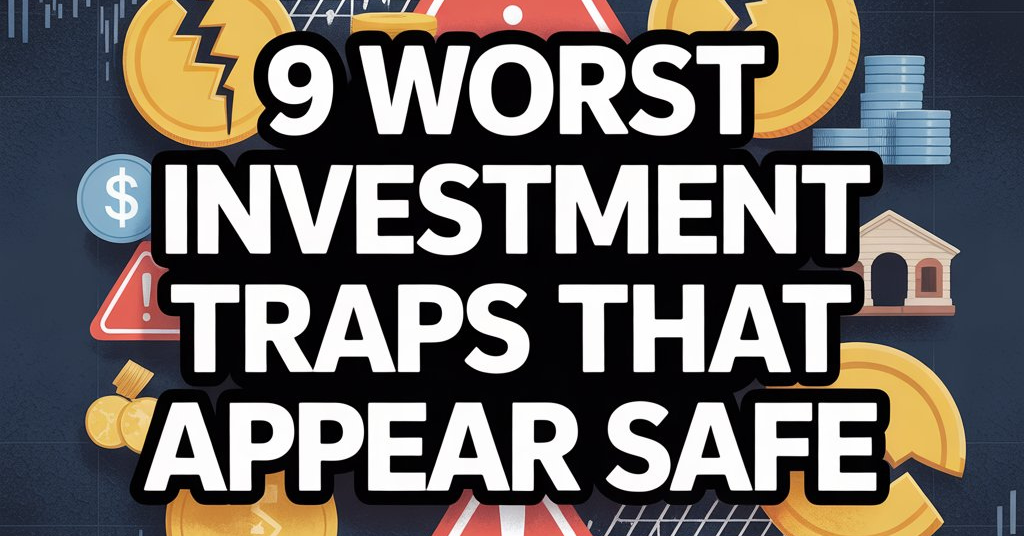
9 Worst Investment Traps That Appear Safe
👉 Trap #1: Chasing Past Performance (The Comfort Illusion)
One of the most common mistakes investors make is believing that what worked before will work again.
When you see an investment that delivered:
- 30% last year
- 40% in the last 12 months
- “Top performer” badges
It feels safe.
Why This Trap Is Dangerous
Markets move in cycles. By the time something looks amazing, most of the gains are already gone.
Dollar Example
You invest $15,000 into a fund that gained 35% last year.
Next year:
- Market cools
- Fund returns just 3%
Your expected gain: $5,250
Actual gain: $450
Meanwhile, a diversified portfolio could have delivered steady growth.
📌 Advisor Tip:
Past returns are history — not a promise.
👉 Trap #2: “Guaranteed” Investment Products
Anytime you hear the word guaranteed in investing, pause.
Guaranteed usually means:
- Limited upside
- Hidden fees
- Long lock-in period
Why It Feels Safe
Humans love certainty. A fixed return sounds better than market ups and downs.
What Actually Happens
Many “guaranteed” products quietly take:
- High management fees
- Exit penalties
- Inflation risk
Dollar Example
You invest $25,000 in a product offering “guaranteed 6%”.
After fees (2%) and inflation (3%):
- Real return ≈ 1%
- Actual gain after 1 year ≈ $250
A simple low-cost index fund could outperform it long term.
👉 Trap #3: Ignoring Fees Because They Look Small
A 1% fee looks harmless.
But over time, it can steal tens of thousands of dollars.
Why This Trap Is Silent
Fees are deducted quietly. You don’t feel the pain — until years later.
Dollar Comparison
Investment amount: $40,000
Time period: 25 years
Annual return before fees: 7%
- Fund A fee: 0.2% → Final value ≈ $207,000
- Fund B fee: 1.8% → Final value ≈ $137,000
💥 Loss due to fees: $70,000
📌 That’s money you earned — but never got to keep.
👉 Trap #4: Overconfidence in a Single Investment
Putting all your money into:
- One stock
- One sector
- One property
- One crypto
Feels safe because you “understand” it.
But safety comes from spreading risk, not concentrating it.
Dollar Example
You invest $30,000 in one company.
- Good news: stock rises 20% → $36,000
- Bad year next: stock crashes 50% → $18,000
Diversification could have reduced this damage.
📌 Advisor Rule:
Never let one idea control your financial future.
👉 Trap #5: Trying to Time the Market
Many investors believe:
“I’ll invest when the market falls.”
The problem?
Nobody knows when the fall ends.
Why This Is Risky
Missing just a few strong market days can destroy long-term returns.
Dollar Impact
You invest $10,000 for 20 years.
- Fully invested strategy → ≈ $38,700
- Miss the best 10 days → ≈ $19,000
You didn’t lose money — you missed growth.
👉 Trap #6: Confusing Low Risk with No Risk
Low-risk investments are often sold as “safe”.
But safe doesn’t mean profitable.
The Hidden Enemy: Inflation
If inflation is higher than your return, you are losing money quietly.
Dollar Example
You invest $20,000 at 3% return.
Inflation rate: 4%
After one year:
- Account shows $20,600
- Buying power is actually lower
📉 Your money looks bigger — but buys less.
👉 Trap #7: Emotional Investing (Fear and Greed)
This trap costs investors more than any market crash.
Emotional Cycle
- Market rises → Greed → Buy high
- Market falls → Fear → Sell low
Dollar Example
You invest $12,000.
Market drops 25%:
- Value = $9,000
- You panic and sell
Market recovers next year by 40%:
- If you stayed, value = $12,600
- But you exited — loss locked in
📌 Advisor Truth:
Emotions and investing should never mix.
👉 Trap #8: Ignoring Taxes on Returns
Many investors calculate profits before taxes — a costly mistake.
Why It Matters
Taxes reduce what you actually keep.
Dollar Example
Capital gain: $8,000
Tax rate: 15%
Tax paid: $1,200
Actual profit: $6,800
Using tax-efficient accounts could save thousands.
👉 Trap #9: Believing “Safe” Means “Set and Forget”
Some investors believe once money is invested, the job is done.
That’s dangerous.
Why This Trap Hurts
Markets change
Goals change
Life changes
Ignoring reviews leads to imbalance.
Dollar Example
Portfolio originally balanced at:
- 60% stocks
- 40% bonds
After years:
- Stocks grow → 80% exposure
- Risk increases unknowingly
A market drop now hurts more than expected.
How to Protect Yourself From These Traps
Here’s the advisor-approved safety checklist:
✅ 1. Write an Investment Plan
Include goals, timeline, risk level, and exit rules.
✅ 2. Diversify Across Assets
Stocks, bonds, real assets, and cash.
✅ 3. Keep Fees Low
Always compare expense ratios.
✅ 4. Think Long Term
Time in the market beats timing the market.
✅ 5. Review Periodically
Quarterly or yearly — not daily.
Quick Summary Table
| Trap | Why It Looks Safe | Real Risk |
| Past returns | Feels proven | Future uncertain |
| Guarantees | Fixed income | Hidden costs |
| Low fees ignored | Seems small | Big long-term loss |
| Single investment | Familiar | High risk |
| Market timing | Feels smart | Missed growth |
| Low-risk assets | Stable | Inflation loss |
| Emotional trades | Human instinct | Permanent loss |
| Taxes ignored | Paper profit | Reduced returns |
| No reviews | Comfort | Misaligned risk |
Also Read: How Emotions Affect Investment Decisions – A Complete Guide
Final Advisor Message
If there’s one thing I want you to remember, it’s this:
Safe-looking investments can be more dangerous than risky ones — because they lower your guard.
True investing success comes from:
- Awareness
- Discipline
- Numbers, not emotions
Avoid these 9 traps, and you’ll already be ahead of most investors.