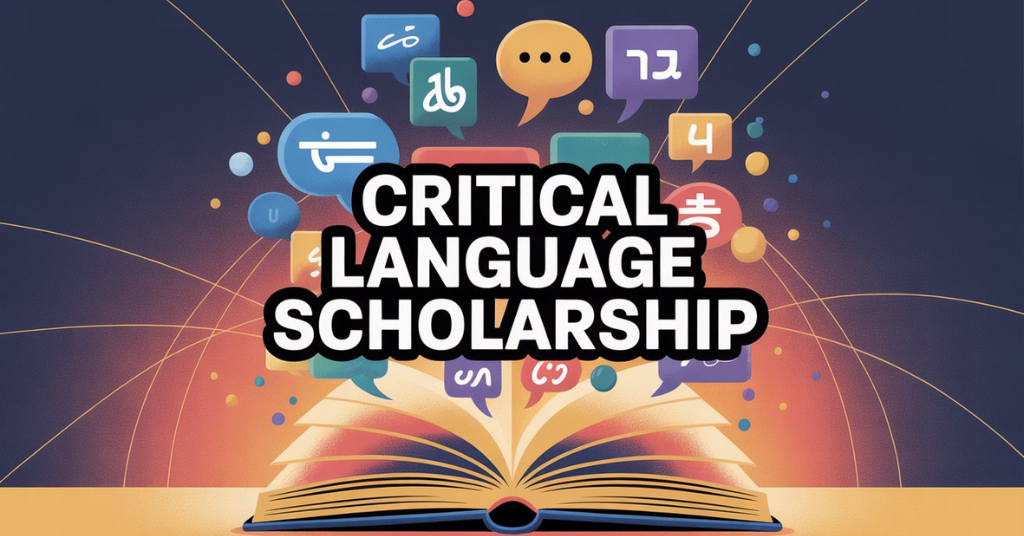
The Critical Language Scholarship (CLS) is one of the most popular fully funded programs for students who want to learn foreign languages and explore new cultures. Every year, thousands of students apply for this scholarship because it gives them a chance to study abroad without worrying about money.
This program is designed to help students learn important global languages in a short time. It also helps them build strong communication skills and understand different cultures.
In this blog, you will learn everything about the Critical Language Scholarship, including its benefits, eligibility, application process, and real-life examples.
📘 What is the Critical Language Scholarship?
The Critical Language Scholarship (CLS) is a fully funded summer program. It allows students to study critical languages in another country for about 8 to 10 weeks.
The main aim of this program is:
- To improve language skills
- To promote cultural understanding
- To prepare students for global careers
Students get intensive training, which means they learn quickly and effectively.
🌐 Why is it Called “Critical Language”?
The term “critical language” refers to languages that are important for global communication, business, and national security.
Some of these languages include:
- Arabic
- Chinese
- Hindi
- Korean
- Japanese
- Russian
- Persian
- Portuguese
- Swahili
These languages are in high demand worldwide, so learning them can give you better career opportunities.
🎁 Benefits of Critical Language Scholarship
One of the biggest reasons students apply for CLS is that it is fully funded. This means almost all expenses are covered.
✔️ What Does CLS Cover?
- Tuition fees
- Airfare (international and domestic)
- Accommodation
- Meals
- Visa fees
- Study materials
- Cultural activities
💰 Example of Total Cost Covered (USD Calculation)
Let’s understand the value of this scholarship with a simple example:
| Expense Type | Estimated Cost (USD) |
| Tuition Fees | $5,000 |
| Airfare | $1,500 |
| Accommodation | $2,500 |
| Meals | $1,000 |
| Visa & Documents | $300 |
| Study Materials | $200 |
| Cultural Activities | $500 |
👉 Total Cost:
$5,000 + $1,500 + $2,500 + $1,000 + $300 + $200 + $500 = $11,000
👉 This means you get a program worth around $10,000–$12,000 for free.
🎓 Eligibility Criteria
To apply for the CLS program, you must meet certain requirements:
✔️ Basic Requirements
- Must be a U.S. citizen
- Must be 18 years or older
- Must be enrolled in a college or university
- Both undergraduate and graduate students can apply
📌 Important Note
Even beginners can apply for some languages, while others may require prior knowledge.
📚 Languages Offered in CLS
The CLS program offers many languages, and each one is taught in a country where it is widely spoken.
Example
- Chinese → China
- Arabic → Middle Eastern countries
- Hindi → India
- Korean → South Korea
This helps students learn the language in a real-life environment.
📝 Application Process (Step-by-Step)
Applying for the CLS program is simple if you follow these steps:
Step 1: Online Application
Fill out the application form with your personal and academic details.
Step 2: Essays
You need to write essays explaining:
- Why you want to learn the language
- Your future goals
- Your interest in the culture
Step 3: Recommendation Letter
Submit a letter from a teacher or professor.
Step 4: Academic Records
Provide your transcripts or marksheets.
Step 5: Submission
Submit everything before the deadline.
🧠 Selection Tips (How to Get Selected)
Getting selected for CLS can be competitive, but you can improve your chances by following these tips:
✔️ Write Strong Essays
Explain your goals clearly and honestly.
✔️ Show Passion
Show your interest in language learning and cultural exchange.
✔️ Be Specific
Mention how the program will help your career.
✔️ Good Academic Record
Maintain good grades.
💼 Career Benefits of CLS
The CLS program is not just about learning a language—it also helps in building a successful career.
✔️ Job Opportunities
You can work in:
- International business
- Government jobs
- Education
- Translation services
✔️ Higher Studies
It helps in applying for:
- Scholarships
- International universities
✔️ Skill Development
You gain:
- Communication skills
- Cultural awareness
- Confidence
📊 Real-Life Example
Let’s take an example of a student named John:
- John studies business in college
- He applies for CLS to learn Chinese
- He gets selected and studies in China for 8 weeks
Result
- He improves his language skills
- Gets an internship in an international company
- Later gets a job with a salary of $60,000 per year
👉 Without CLS, he might not have had this opportunity.
🌟 Why You Should Apply for CLS
Here are some simple reasons:
- It is fully funded
- You get international exposure
- You learn valuable skills
- It improves your career chances
⚠️ Challenges of CLS Program
While CLS is a great opportunity, it also has some challenges:
❗ Intensive Learning
You study many hours daily.
❗ Cultural Adjustment
Living in a new country can be difficult at first.
❗ Competitive Selection
Many students apply, but only a few are selected.
❓ Frequently Asked Questions (FAQs)
Q1: Is CLS fully funded?
Yes, it covers almost all expenses.
Q2: Can beginners apply?
Yes, for some languages beginners are allowed.
Q3: How long is the program?
Usually 8 to 10 weeks.
Q4: Is it difficult to get selected?
Yes, but with good preparation, you can succeed.
Also Read: Burger King Scholarship: Complete Guide for Students
🏁 Conclusion
The Critical Language Scholarship (CLS) is a life-changing opportunity for students who want to learn new languages and explore the world. It not only saves money but also opens doors to global careers.
If you are passionate about learning and want to grow personally and professionally, this scholarship is a great choice.
Start preparing early, write strong applications, and take your first step toward an international future.