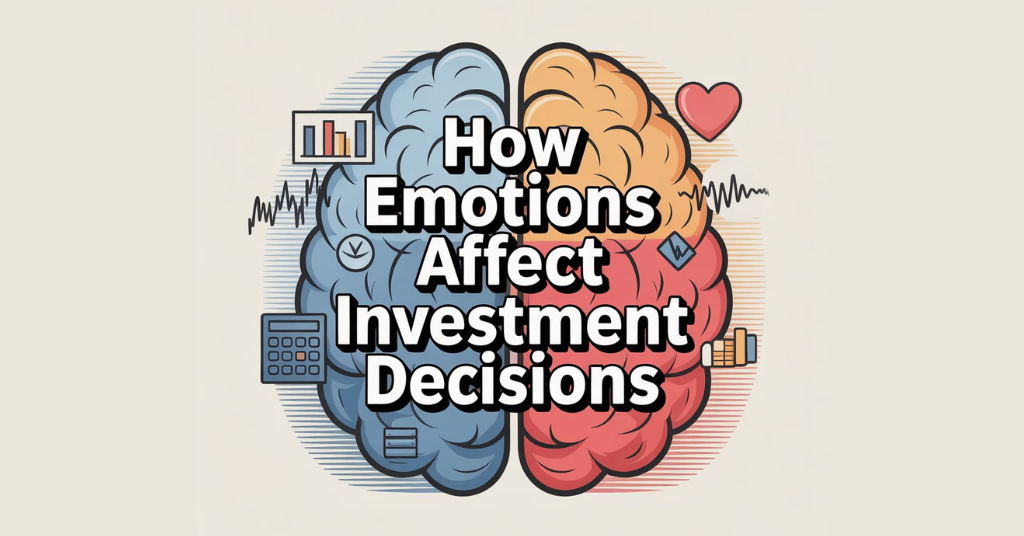
Many people believe investing is only about numbers, charts, and market trends. But in reality, emotions play a very big role in investment decisions. Fear, greed, excitement, and confidence often influence investors more than logic. Even experienced investors sometimes make mistakes because of emotional reactions.
When markets go up, people feel happy and confident. When markets fall, fear and panic take control. These emotional responses can lead to poor financial decisions, losses, and missed opportunities. Understanding how emotions affect investment decisions can help you become a smarter and more disciplined investor.
In this blog, we will explain how emotions influence investing, common emotional biases, real-life examples, dollar-based calculations, and practical ways to control emotions while investing.
What Is Emotional Investing?
Emotional investing means making financial decisions based on feelings instead of facts. Instead of following a plan, investors react to market news, price changes, or what others are doing.
For example:
- Buying stocks because everyone is talking about them
- Selling investments because the market is falling
- Holding losing investments because of hope or regret
Emotions are natural, but when they control investment decisions, they often lead to losses.
Why Emotions Strongly Influence Investment Decisions
Money is closely connected to:
- Security
- Lifestyle
- Family needs
- Future goals
Because money affects our lives deeply, emotional reactions are normal. However, the market does not move based on emotions—it moves based on data, performance, and long-term growth.
When emotions clash with logic, investors usually:
- Buy at high prices
- Sell at low price
- Take unnecessary risks
- Miss long-term growth
Major Emotions That Affect Investment Decisions
1. Fear
Fear is one of the strongest emotions in investing.
How Fear Affects Investors
- Panic selling during market drops
- Avoiding investments even when prices are attractive
- Moving money too quickly into cash
Example
Suppose you invested $10,000 in a stock market fund.
During a market crash, your investment falls to $7,000.
Out of fear, you sell and lock in a $3,000 loss.
If you had stayed invested and the market recovered by 40% later:
- $7,000 × 1.40 = $9,800
Fear caused you to lose money that could have been recovered.
2. Greed
Greed pushes investors to chase quick profits.
How Greed Affects Investors
- Buying overpriced assets
- Ignoring risks
- Investing without proper research
Example
An investor sees a stock rising fast and invests $5,000 hoping it will double quickly.
The stock drops by 50% due to correction:
- $5,000 × 0.50 = $2,500
Greed leads to loss because decisions were driven by excitement, not analysis.
3. Overconfidence
Overconfidence makes investors believe they are smarter than the market.
How Overconfidence Affects Investors
- Trading too frequently
- Ignoring expert advice
- Taking high risks
Example
An overconfident investor trades frequently with $20,000.
Each trade costs $20 in fees.
If they make 10 trades per month:
- 10 × $20 = $200 per month
- $200 × 12 months = $2,400 per year
Overconfidence reduces profits due to unnecessary costs.
4. Loss Aversion
Loss aversion means people feel the pain of loss more than the joy of profit.
How Loss Aversion Affects Investors
- Holding losing stocks too long
- Selling winning stocks too early
- Avoiding good opportunities
Example
You buy a stock at $1,000.
- It drops to $700, but you refuse to sell, hoping it will recover.
- Meanwhile, a better opportunity could have earned 8% annually.
Missed gain:
- $1,000 × 8% = $80 per year
Holding losses can block better investments.
5. Regret
Regret happens when investors fear making the wrong decision.
How Regret Affects Investors
- Avoiding investing after a loss
- Hesitating to make decisions
- Missing long-term growth
Example
An investor avoids investing $15,000 after a past loss.
If the market grows at 7% annually:
- $15,000 × 7% = $1,050 per year
- Over 10 years, growth potential is lost.
6. Herd Mentality
Herd mentality means following others instead of thinking independently.
How Herd Mentality Affects Investors
- Buying during bubbles
- Selling during panic
- Ignoring personal goals
Example
Everyone is buying a popular stock at $200 per share.
You buy 20 shares:
- 20 × $200 = $4,000
The stock crashes to $120:
- 20 × $120 = $2,400
Loss due to herd behavior:
- $4,000 − $2,400 = $1,600
7. Confirmation Bias
Confirmation bias means only accepting information that supports your belief.
How It Affects Investors
- Ignoring warning signs
- Holding risky investments
- Making one-sided decisions
This bias can increase losses over time.
Emotional Market Cycles
Markets move in emotional cycles:
- Optimism
- Excitement
- Euphoria
- Anxiety
- Fear
- Panic
- Recovery
Most investors:
- Buy during excitement
- Sell during panic
Smart investors do the opposite.
How Emotions Impact Long-Term Wealth
Let’s compare two investors:
Investor A (Emotional)
- Invests $10,000
- Panics during downturns
- Average return: 4%
After 20 years:
- $10,000 → approx. $21,900
Investor B (Disciplined)
- Invests $10,000
- Stays invested
- Average return: 8%
After 20 years:
- $10,000 → approx. $46,600
Emotions cost Investor A $24,700 in lost wealth.
How to Control Emotions in Investment Decisions
1. Have a Clear Investment Plan
A written plan keeps emotions under control.
2. Set Long-Term Goals
Focus on goals like retirement, education, or wealth creation.
3. Diversify Your Portfolio
Diversification reduces risk and emotional stress.
4. Avoid Daily Market Watching
Constant monitoring increases anxiety and impulsive actions.
5. Invest Regularly
Regular investing removes emotional timing decisions.
6. Use Data, Not Feelings
Base decisions on performance, fundamentals, and long-term trends.
7. Review, Don’t React
Review investments periodically instead of reacting to short-term news.
Real-Life Emotional Investing Scenario
An investor invests $1,000 per month for 10 years.
With Emotional Decisions
- Misses market dips
- Average return: 5%
- Total invested: $120,000
- Value after 10 years: approx. $155,000
With Disciplined Investing
- Stays invested
- Average return: 8%
- Value after 10 years: approx. $183,000
Difference caused by emotions:
- $28,000
Why Understanding Emotions Makes You a Better Investor
When you understand emotional behavior:
- You avoid costly mistakes
- You stay calm during volatility
- You make rational decisions
- You grow wealth steadily
Emotions never disappear, but managing them is the key to successful investing.
Also Read: Hidden Fees in Investing: How They Quietly Reduce Your Returns
Conclusion: How Emotions Affect Investment Decisions
Emotions affect investment decisions more than most people realize. Fear, greed, overconfidence, regret, and herd mentality can push investors toward poor choices and financial losses. By understanding emotional behavior, following a disciplined strategy, and focusing on long-term goals, investors can protect their money and build wealth over time.
Successful investing is not about controlling the market—it is about controlling your emotions. When logic leads and emotions follow, your financial future becomes stronger and more secure.